


Ball screw
Publish Time:
2024-10-31
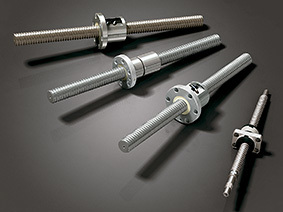
Ball screw units, also known as ball screw assemblies or ball screw mechanisms, consist of a screw and a nut working together. They are currently the most precise and widely used transmission devices in mechanical transmission systems. Below is a detailed introduction to ball screw units:
1. Working Principle:
• Ball screw units utilize the rolling motion of balls on the screw threads to convert rotational motion into linear motion. The balls are housed in a recirculating channel within the nut. When the screw rotates, the balls roll within the channel, pushing the nut to move axially along the screw shaft. This structure gives ball screw units high efficiency and load-bearing capacity, making them suitable for high-precision and high-load applications.
2. Features:
• High Transmission Efficiency: Due to the rolling friction of the balls, the frictional resistance of ball screw units is significantly reduced compared to traditional sliding screw units, greatly improving transmission efficiency. This can reach 92%-98%, 2-4 times that of ordinary screw transmissions.
• High Precision: Strict control over environmental factors such as temperature and humidity during production, combined with thorough quality management, results in high precision ball screw units. Preloading during installation further improves positioning and repeatability accuracy.
• Enables Micro-feed: Ball screw units have extremely low starting torque and do not exhibit creeping, ensuring accurate micro-feeding.
• High Rigidity: Applying pre-load to the balls results in a negative axial clearance, increasing the rigidity of the ball screw unit.
• Reversible Transmission: It can convert rotary motion into linear motion and vice versa, but this also means it cannot self-lock; braking devices are needed in vertical installations.
• Long Service Life: The balls, screw, and nut are all hardened, minimizing wear from rolling friction, resulting in a long service life.
3. Recirculation Methods:
• External Recirculation: After the recirculation process, the balls are returned to the space between the screw and nut through a spiral groove or tube on the outer surface of the nut to re-enter the cycle. This method features simple structure and manufacturing process and is widely used, but the seams of the raceway are difficult to make smooth, affecting the smoothness of the ball raceway. External recirculation can be further divided into end cap type, insert tube type, and spiral groove type.
• Internal Recirculation: Uses a return mechanism to achieve ball recirculation. Return mechanisms include cylindrical cam type and flat-oval insert type. Internal recirculation offers advantages such as compact radial dimensions, good rigidity, shorter return raceway stroke, low frictional loss, and high efficiency.
4. Applications: Ball screw units are widely used in CNC machine tools, automated equipment, precision instruments, aerospace, and other fields, serving as key components for precise linear motion in these devices.
Latest News

 2025-01-08

Get a Free Consultancy


No. 39, Life Second Road, Dalian Economic and Technological Development Zone, 8-5
Copyright © 2025 Maoming Precision Machinery (Dalian) Co., Ltd. All Rights Reserved.