


Small (linear guide) clamps have a big role.
Publish Time:
2025-01-09
The clamping mechanism operates on the principle of friction. Gas enters the clamping mechanism through the inlet, driving the piston and generating thrust, which in turn drives the wedge. The wedge, via rollers, drives the friction block, pressing it firmly against the side of the guide rail, generating normal pressure and thus friction, achieving clamping and braking functions. When clamping needs to be released, gas is discharged from the outlet, causing the piston to move in reverse. The wedge returns to its original position under the action of the spring, and the friction block disengages from the side of the guide rail.
Clamping mechanisms come in normally open and normally closed configurations. Today, we will introduce the normally closed clamping mechanism, which operates by clamping when air is off and unclamping when air is on.
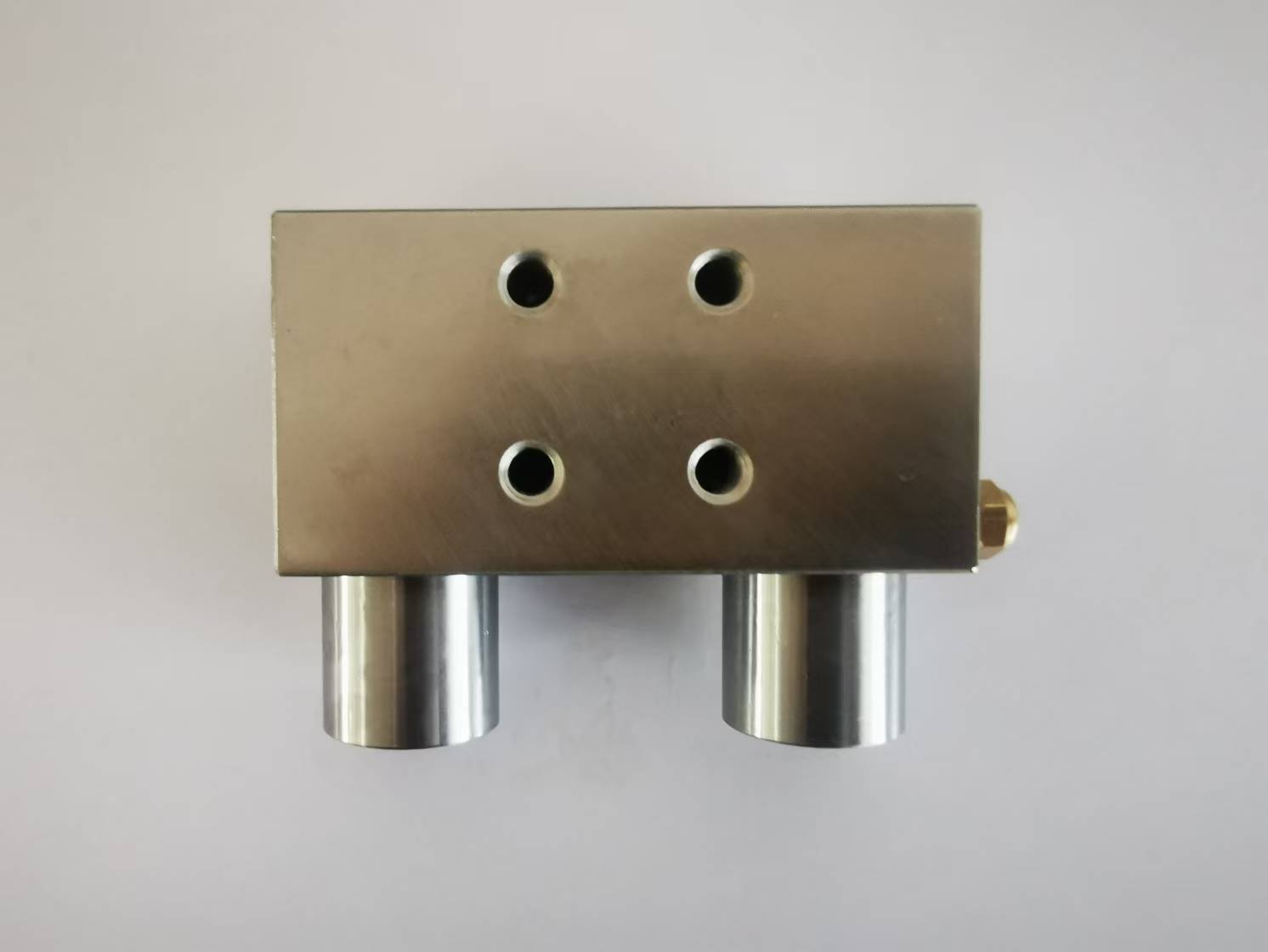
This is a picture of a normally closed clamping mechanism. The image clearly shows that the normally closed version has an additional component compared to the normally open one, making it easy to differentiate between them. Clamping mechanisms can be used on many types of guide rails, including common brands such as THK linear guides, HIWIN linear guides, and HTPM linear guides.
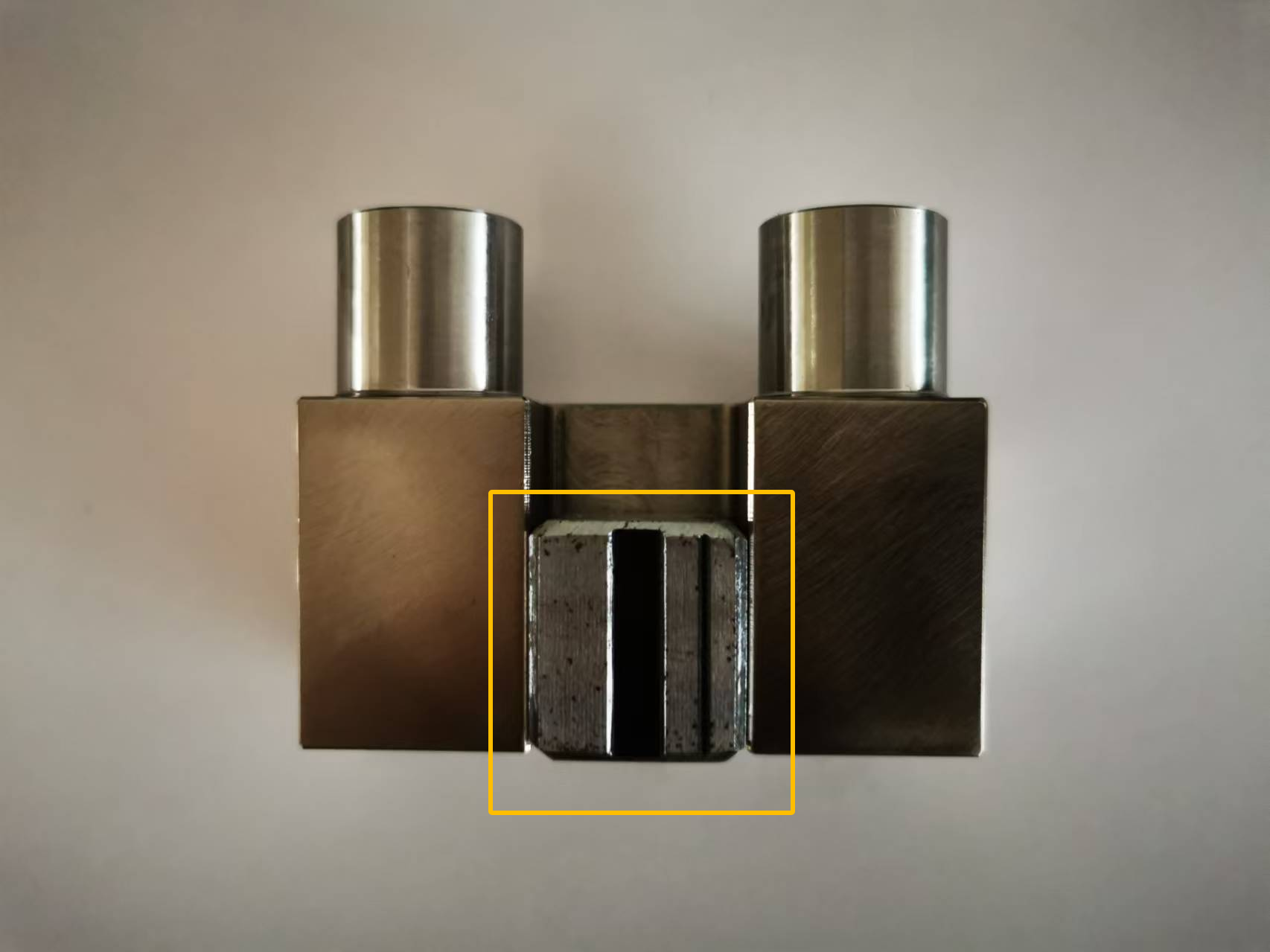
Normally closed clamping mechanisms come with a small insert from the factory. Before use, this insert must not be removed, otherwise the clamping mechanism may be damaged. Despite their small size, clamping mechanisms offer a multitude of uses, including worktable fixation, precise positioning, vibration prevention, rigidity enhancement, and emergency braking.
Clamping, wedge, linear guide rail, friction, guide rail
Latest News

 2025-01-08
Get a Free Consultancy


No. 39, Life Second Road, Dalian Economic and Technological Development Zone, 8-5
Copyright © 2025 Maoming Precision Machinery (Dalian) Co., Ltd. All Rights Reserved.